In this blog, I explore my learning about Indigenous Education and online learning, inspired by Dr. Jean-Paul Restoule’s keynote on Indigenous-centred online course design.
Indigenous-Centred Online Learning
In an online course, students can revisit resources, explore topics in greater depth, and connect what they learn to their own lives. Dr. Jean-Paul shared how the Medicine Wheel (mind, body, spirit, emotion) can guide course design so that learning is holistic, not just intellectual (Restoule, n.d.)
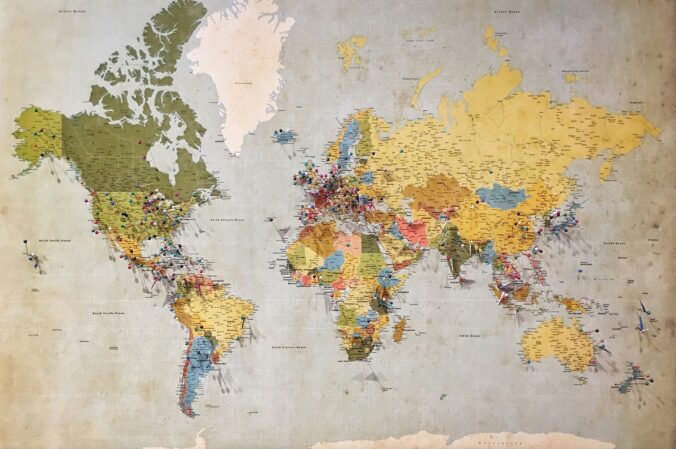
One example that stood out to me was inviting students to mark a dot on a world map showing a place that is special to them. This simple activity can open the door to deeper conversations, stories, and relationships in an online space.
The 5 Rs of Indigenous Education
Dr. Jean-Paul Restoule developed the 5Rs model to help us think about why and how to integrate Indigenous pedagogies into an online classroom (Learning Design & Digital Innovation, n.d.)
The 5Rs:
- Relationship
- Respect
- Responsibility
- Relevance
- Reciprocity
I chose to focus more deeply on Responsibility.
For me, responsibility means:
- Designing learning goals that include cultural safety and decolonial awareness.
- Checking in with students about their responsibilities as learners, and as future leaders and elders in their communities.
- Taking time to reflect on and unlearn my own colonial assumptions so I can design learning experiences that are more respectful and inclusive.
As a future teacher, I plan to use the 5R as a tool to help guide my online and face to face classes.
References
Learning Design & Digital Innovation. (n.d.). The 5Rs model. The University of British Columbia. https://lddi.educ.ubc.ca/integrating-indigenous-pedagogies-into-online-learning/5rs/
Restoule, J.-P. (n.d.). Indigenous-centred online course design [Keynote video]. Department of Indigenous Education, University of Victoria. https://drive.google.com/file/d/1gb_IjgCnq1PoxpU0ffGLRde3hNB7Vr_-/view